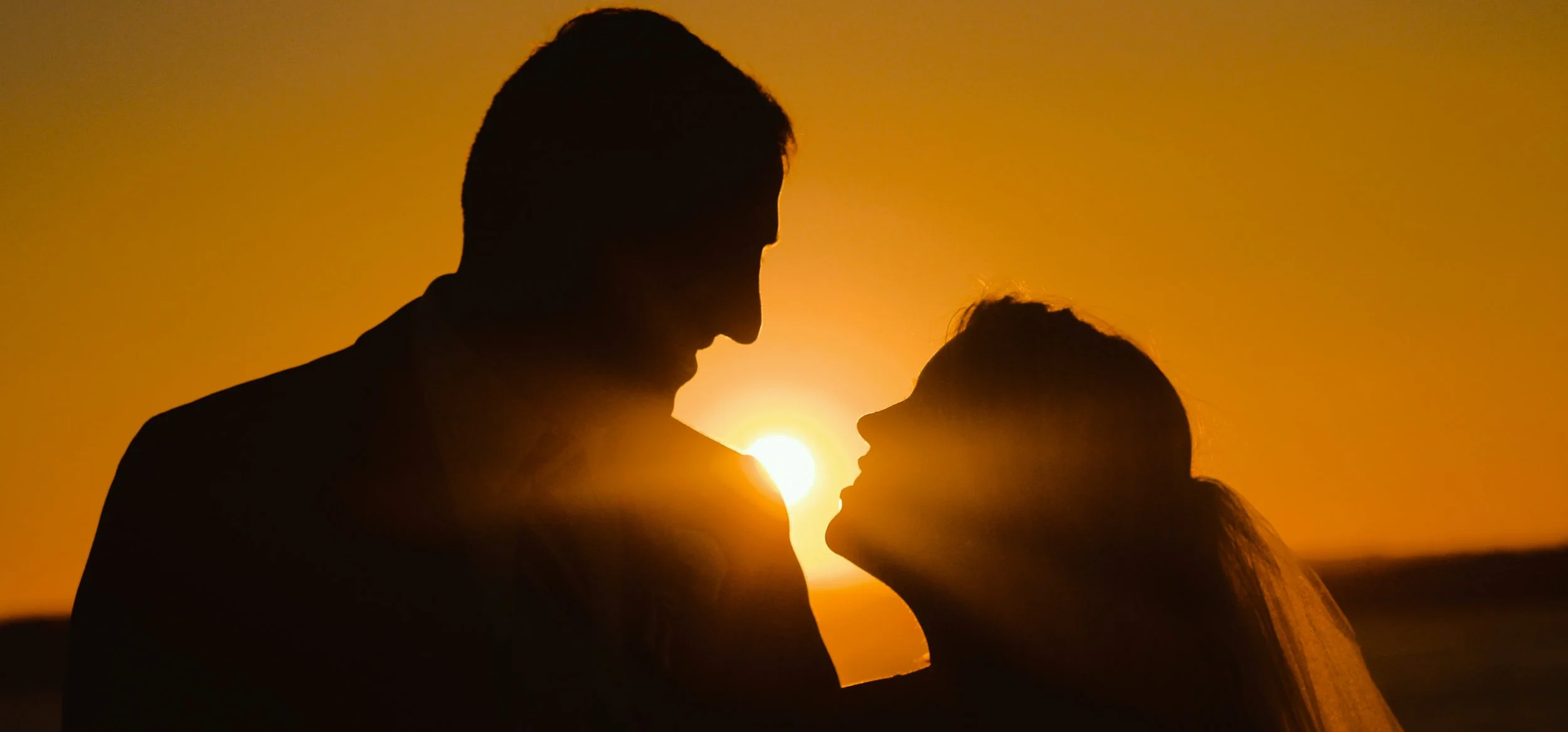
The ceremony lawn at Castle Hill Inn sits directly above the water. Not near it. Above it. On a clear afternoon the horizon is the only thing between the altar and the open Atlantic, and the light that falls across Narragansett Bay at four o'clock has a quality that does not exist anywhere else in New England.
This is one of those venues that asks something of the people making the film. The scale is generous and the setting is unmistakable, but the real work is finding where the person lives inside all of it: the groom's exhale when he sees the lawn full of guests, the sound of the water under the vows. Those are the frames that last. The scenery is the context. The people are the film.
We've filmed at Castle Hill Inn. This is a guide to the space, what it asks of a wedding filmmaker, and what Paige and Steve's day on the Lawn looked and sounded like.
The Space — Light, Sound, and Forty Acres of Oceanfront Estate
Castle Hill Inn is a Relais & Châteaux property on Ocean Drive in Newport, set on forty acres that stretch from the treeline down to the rocky coastline of Narragansett Bay. The estate has the rare quality of feeling both grand and quiet. The scale is there, but so is the privacy of a working country house.
There are four distinct ceremony settings, and each one reads differently in a film.
The Lighthouse stands at the actual water's edge. Marrying there means the Atlantic is not a backdrop. It is an active presence. The wind carries ambient sound that no microphone can replicate indoors, and the light bouncing off the water creates a warmth that shifts minute to minute. From a filmmaking standpoint, the Lighthouse is one of the most demanding and most rewarding locations in New England: there is nowhere to hide from the sky, and no manufactured light competes with what is already there.
The Lawn is where Paige and Steve married. An open, verdant stretch that faces the bay and can hold a large gathering, roughly 400 guests al fresco, without ever feeling like a parking lot full of chairs. The expanse matters because it forces the filmmaker to choose: the wide frame that tells the guest where they are, or the close frame that tells the audience who these people are. The answer, at Castle Hill, is usually both, and the transition between them is where the film earns its weight.
The Chalet Terrace is a sailcloth tent space, positioned over the marina and the bay. Under the tent at dusk, the light through canvas has a particular warmth: softer than direct sun, more even than artificial. It is a forgiving space to film and a generous one for photography. For couples planning the photography side of the day, our Newport wedding photography across the Chalet and the rocky shoreline is documented on our Newport wedding photographer page.
The mansion's interior spaces, with fireplaces and the Aurelia dining rooms, offer the kind of enclosed, low-light settings that reward a cinematographer who understands available light. The contrast between an interior toast and the Lawn ceremony earlier in the day gives a film its range.
One detail that matters and rarely appears in venue brochures: the rocky beach access. Below the Lawn, the granite ledge and the water are thirty seconds from the reception site. For still photography especially, the transition from formal grounds to raw coastline is one of the strongest location assets in Newport. The photography we make on that coastline is part of our wedding photography work. It belongs to the same day and the same record, and it is not an afterthought.
What Makes Filming at Castle Hill Inn Different
Most Newport venues give you one setting and ask you to make it work. Castle Hill gives you four settings and a shoreline, and the question becomes how to move between them with intention rather than just logging locations.
The Atlantic changes everything acoustically. Outdoor vows at Castle Hill are recorded against a bed of ambient ocean sound that is neither intrusive nor ignorable. It is part of the day. When the finished film plays and that sound comes through speakers, it locates the viewer immediately. You are back on the Lawn. That is not something music or color grading can manufacture. It either happened or it did not.
The light on Ocean Drive in late afternoon moves fast. The bay reflects it, the Lawn absorbs it differently than the stone of the mansion walls, and the transition window from golden hour to blue hour is roughly forty minutes. A filmmaker who has not worked this property before will spend those forty minutes orienting. A filmmaker who has been here knows where the light lands first, where it holds longest, and which angle catches the water's reflection without blowing out the couple's faces.
The other thing Castle Hill asks: restraint. The temptation at a property this grand is to build every frame around the setting. The couples who watch their film a year later are not looking for a Newport estate tour. They are looking for the moment their mother saw them in the dress, the way their spouse's voice broke during the vows, the photograph of the two of them at the edge of the granite ledge with nothing behind them but open water. Those frames require the same presence as any other wedding, regardless of what the forty acres look like around them.
A Netflix-credited filmmaker leading a film at a Relais & Châteaux property. That combination is not common. The credential matters here because the property demands it: Castle Hill Inn does not need a camera crew. It needs a witness.
Paige & Steve at Castle Hill Inn
Paige and Steve married on the Lawn on a day when the wind was low enough to hold still. The bay was flat and the light came in from the southwest in the way it does in early evening: long, horizontal, the kind that makes every face glow without trying.
The ceremony was above the water in every sense. Looking out from where the officiant stood, you could see the open Atlantic past the harbor, and the guests were arranged with the whole expanse behind them. The film opens on the sound of that. Not music, not a title card, but the ambient breath of the ocean at Castle Hill before a word is spoken.
What the film holds from that day: Steve's face when Paige appeared at the far end of the Lawn. The way the light caught the white of her dress against the bay. The vows, in full, recorded with the ocean as the room. And the rocky shoreline afterward, where the photographs were made in those last forty minutes of golden-hour light — the coastline frames that are as much a part of the day's record as anything that happened on the Lawn.
The film lives below. Watch it with the sound on.
Questions Couples Ask About Castle Hill Inn
Who films weddings at Castle Hill Inn?
New England Wedding Film has filmed at Castle Hill Inn. We're led by a Netflix-credited filmmaker and have documented more than 500 weddings across New England, including multiple Relais & Châteaux properties and Newport's prestige venues. With 56 five-star Google reviews and no complaints on record, the body of work speaks for itself. Couples searching for a filmmaker at Castle Hill are looking for someone who has been on that Lawn and knows how the light moves, not someone learning the property on their wedding day.
Can one studio photograph and film a Castle Hill Inn wedding?
Yes, and for Castle Hill in particular, your wedding film and your photographs together are the stronger choice. The estate offers settings that are as strong for still photography as they are for film: the Lighthouse at the water's edge, the granite ledge below the Lawn, the Chalet Terrace under sailcloth at golden hour. A still image from the rocky coastline at Castle Hill holds differently than a film frame. It is its own object, made to be printed and framed, not watched. We photograph and film at the same prestige level. The wedding photography is not a supplement to the film. It is an equal part of the day's record. Both crafts are available, together or separately.
Where can you hold a ceremony at Castle Hill Inn?
Castle Hill offers four primary ceremony settings: the Lighthouse (at the water's edge, fully exposed to the bay and the ocean), the Lawn (the open oceanfront expanse, al fresco, for larger gatherings), the Chalet Terrace (a sailcloth tent space over the marina), and the mansion's indoor spaces with fireplaces. Each reads differently in a film and each has its own photographic character. The Lighthouse and the Lawn are the most distinctive: both put the Atlantic directly in frame.
How many guests does Castle Hill Inn accommodate?
The indoor mansion spaces hold up to roughly 250 guests. The Lawn and the sailcloth tent can accommodate larger celebrations, up to roughly 400 al fresco. For exact capacity by setup and event type, Castle Hill Inn's events team is the right source. Those figures shift depending on layout, catering configuration, and the nature of the event.
Can you get married outdoors or directly on the water at Castle Hill?
Yes. The Lighthouse ceremony location puts the couple at the literal water's edge, with the bay and the open Atlantic as the backdrop. The Lawn is fully al fresco with the water visible from the ceremony site. Both are among the most genuinely oceanfront ceremony settings in New England. Not "ocean-view" from a terrace, but at or directly above the water. The rocky shoreline below the Lawn is also accessible and is one of the strongest locations on the property for outdoor photography.
What is the light like at Castle Hill Inn for a wedding film?
The light at Castle Hill is defined by the water. Narragansett Bay reflects afternoon light back onto the Lawn and the guests in a way that creates warmth without harshness. It is the quality that makes golden hour at coastal venues different from inland ones. The window runs roughly from four o'clock until just after sunset, and it moves quickly. The rocky shoreline catches it at a different angle than the open Lawn, which is why the two locations are often used in sequence: ceremony on the Lawn, photographs below on the granite as the light holds its last twenty minutes. For the film, that ambient light is the environment. No supplemental lighting competes with it.
Is Castle Hill Inn difficult to film?
It is demanding and worth it. The outdoor settings, especially the Lighthouse and the Lawn, mean the filmmaker is working with wind, variable light, and the acoustic environment of the ocean. Oceanfront ambient sound is a gift to the finished film and a logistics challenge during production: microphone placement, audio monitoring, and backup recording all matter more here than at a standard ballroom wedding. The property's scale also means the cinematographer's choices about where to be at a given moment are consequential. None of this is a problem for a filmmaker who has worked the property. It is a challenge for one who has not.
How soon is the film delivered after a Castle Hill wedding?
Our standard turnaround is shared when you inquire. Delivery timelines depend on the season and the current schedule. The film is not rushed. It is reviewed by the filmmaker who shot it before it goes to you. The edit is not a template laid over your day. It is built from your footage, your audio, your light at Castle Hill. That takes the time it takes. Reach out directly to discuss timing for your date.
Planning a Wedding at Castle Hill Inn?
Castle Hill Inn books early, and so does the vendor team a Relais & Châteaux wedding demands. If you are in the planning stages and the film is still on the list, the right first step is a conversation, not a form.
We accept roughly 22 commissions a year. Each one is reviewed by the same filmmaker. The calendar fills by date. Once a date is held, it is held.
"This was the best decision we made for our entire wedding." That is the language couples use after the fact, unprompted, across 56 five-star Google reviews. It is the language that shows up when the film plays at a one-year anniversary and someone says they forgot that sound, that light, that moment on the Lawn above the Atlantic.
If Castle Hill Inn is where your day is happening, reach out. The conversation is where it starts.